


Signs Your Rowland Unified Student Is Struggling to See This School Year (And How We Can Fix It)
A new school year brings long hours of reading, writing, computer use, classroom presentations, and homework. If your child cannot see clearly or their eyes are working harder than they should, these everyday demands can become frustrating. At InnoVision Optometry in Rowland Heights, CA, we provide pediatric eye exams, comprehensive eye exams, glasses, and myopia management to help local students get the clear, comfortable vision they need for school. Children do not always recognize when their vision is blurry. If they have seen a certain way for a long time, they may assume their eyesight is normal. That means parents and teachers are often the first to notice changes in behavior. InnoVision Optometry notes that school places significant visual demands on children, including reading, writing, computer work, and viewing classroom boards. Vision is also important during sports and other physical activities. A child struggling in one of these areas does not automatically have a vision problem, but persistent signs are worth discussing during a pediatric eye exam in Rowland Heights. Some warning signs are easy to recognize, while others may look like attention or academic difficulties. Parents should watch for: The American Optometric Association also lists frequent headaches, losing place while reading, holding reading material close, and avoiding near activities among potential signs of eye and vision problems in school-aged children. Passing a school vision screening is helpful, but it does not necessarily mean every part of your child's visual system is working normally. A basic screening may primarily evaluate distance visual acuity. A comprehensive eye exam can go further by assessing prescription needs, eye health, focusing, eye teaming, depth perception, peripheral vision, and eye movements. For Rowland Unified students who continue to struggle despite passing a screening, a comprehensive pediatric eye exam can provide a more complete picture. If your child's difficulty is caused by an uncorrected refractive error such as nearsightedness, farsightedness, or astigmatism, prescription glasses may provide the clearer vision they need. Nearsightedness, or myopia, is especially common during the school years. Children with myopia can generally see close objects more clearly while classroom boards, signs, and other distant details appear blurry. InnoVision Optometry identifies myopia as a common refractive error among school-aged children and provides eyeglasses as well as dedicated myopia management services. For some children, simply prescribing stronger glasses every year may not be the only option. Myopia management is designed to slow the progression of nearsightedness while a child's eyes are still developing. InnoVision Optometry offers myopia control and Ortho-K services in Rowland Heights. The practice also provides pediatric eye care for families who want to closely monitor changes in their child's prescription over time. If your child's prescription is becoming noticeably stronger from year to year, an evaluation can help determine whether standard glasses or a myopia management approach better fits their needs. Academic difficulties have many possible causes, and an eye exam cannot solve every classroom challenge. However, identifying and treating an uncorrected vision problem can remove one unnecessary obstacle from your child's school day. Regular pediatric eye exams also give us an opportunity to monitor how vision changes as your child grows. If your Rowland Unified student is squinting, losing their place while reading, struggling to see the board, or complaining about blurry vision, schedule a pediatric eye exam with InnoVision Optometry at 17572 Colima Road, Rowland Heights, CA 91748, or call 626-593-8700 to help your child see the school year more clearly.
Vision Problems Are Not Always Obvious
Signs Your Rowland Unified Student May Need an Eye Exam
A School Vision Screening May Not Tell the Whole Story
When Glasses Can Make a Difference
What If Their Myopia Keeps Getting Worse?
Give Your Child Clearer Vision for the School Year

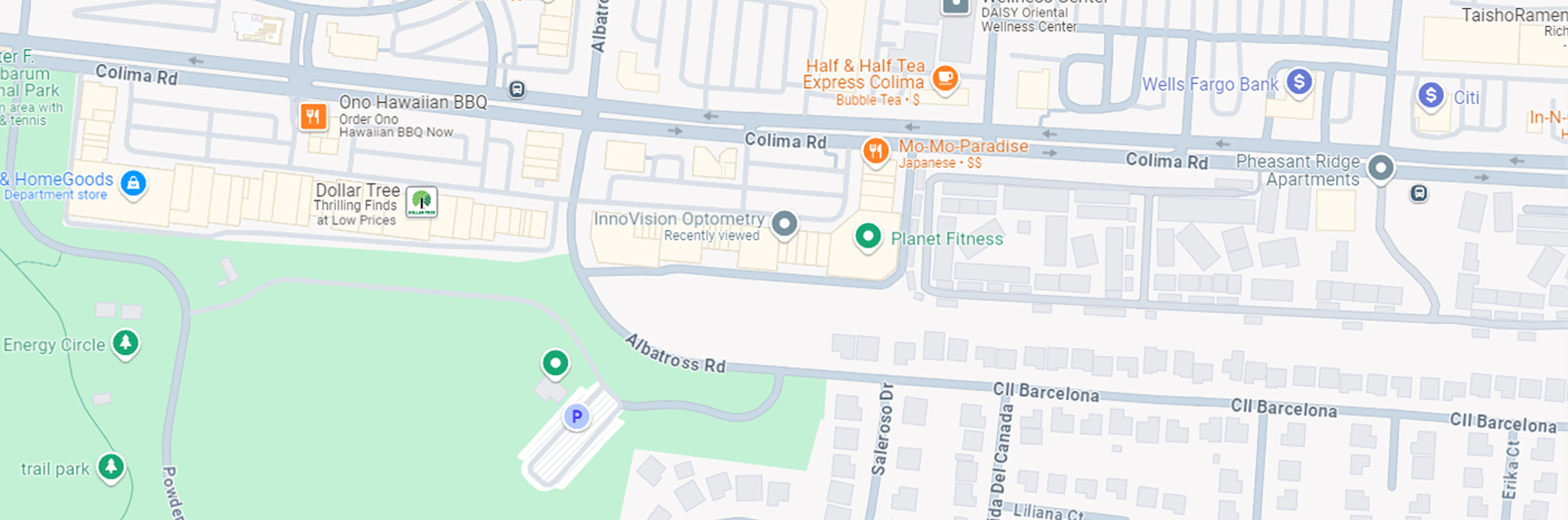
MAP


CONTACT INFO
HOURS
Monday 10:00AM - 6:30PM
Tuesday Closed
Wednesday 10:00AM - 6:30PM
Thursday 10:00AM - 6:30PM
Friday 10:00AM - 6:30PM
Saturday 10:00AM - 6:30PM
Sunday Closed
© 2026 InnoVision Optometry. All Rights Reserved. Accessibility Statement - Privacy Policy - Sitemap
Powered by: 